
regulation part of frustration of contract termination definition
Government regulation can have a significant impact on contractual obligations, and in some cases, it may give rise to the legal doctrine of frustration. Understanding whether government regulation is part of frustration of contract termination definition is critical for both employers and employees, as it determines when a contract may be automatically terminated without liability due to unforeseen legal changes. This distinction is important because it clarifies how regulatory changes differ from voluntary termination or breach of contract.
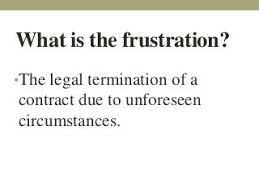
Frustration of contract termination definition occurs when an unforeseen event arises after the contract is formed, making it impossible to perform the agreed obligations or radically altering the nature of the contract. Government regulation can fall into this category when new laws or rules prevent a party from fulfilling their contractual duties. For example, if a company has a fixed-term contract to provide a specific service and new legislation makes that service illegal, the contract may be frustrated. In this case, the law intervenes in such a way that neither party is at fault, and the contractual relationship ends automatically.
For frustration to apply due to government regulation, the regulatory change must be unforeseen and beyond the control of the parties. Frustration of contract termination definition does not cover situations where regulatory risks were anticipated or could have been mitigated by the parties. For instance, if a contract explicitly mentions compliance with future regulations and allocates responsibility for legal changes, frustration may not be invoked. Courts look carefully at whether the regulation fundamentally prevents the performance of the contract or merely increases the difficulty or cost of fulfilling obligations. Only the former situation usually qualifies as frustration.
Is government regulation part of frustration of contract termination definition?
The automatic nature of frustration is a key feature. Frustration of contract termination definition emphasizes that the contract ends by operation of law when the regulatory event occurs. Neither the employer nor the employee needs to consent for the termination to take effect. This contrasts with resignation, dismissal, or mutual agreement, all of which require deliberate action by one or both parties. In practice, this means that when a new government regulation makes performance impossible, the parties are legally relieved of future obligations without liability for breach, while any rights or benefits accrued before the regulation remain enforceable.
Legal precedents support the inclusion of government regulation under the doctrine of frustration. Courts have historically recognized that when compliance with new laws renders contractual performance illegal, the contract can be deemed frustrated. This principle ensures fairness by preventing parties from being held liable for obligations that are impossible to perform due to external legal constraints. It also underscores that frustration is a narrow and strictly applied doctrine, reserved for situations where performance is genuinely impossible or fundamentally altered.
It is important for both employers and employees to understand the implications. If government regulation triggers frustration, future contractual obligations are discharged, but accrued benefits or payments up to the point of frustration are typically still owed. Misunderstanding this distinction can lead to disputes over compensation, notice periods, or other entitlements. Legal advice is often sought to clarify whether the circumstances meet the strict criteria for frustration.
In conclusion, government regulation can indeed be part of frustration of contract termination definition when it creates an unforeseen, unavoidable situation that makes performance impossible or radically different. Recognizing this application allows parties to navigate legal changes effectively and ensures that contracts are terminated fairly when external regulatory forces intervene, providing clarity and protection for both employers and employees.
